Signature Details & Novel TechniquesMinoár was born out of the desire to create a distinct and comprehensive appearance. Over the years, several novel techniques and functional details were created and introduced. Elements such as buttons, buckles, welt pockets, and fabric itself found their in-depth position within an artisan realm.
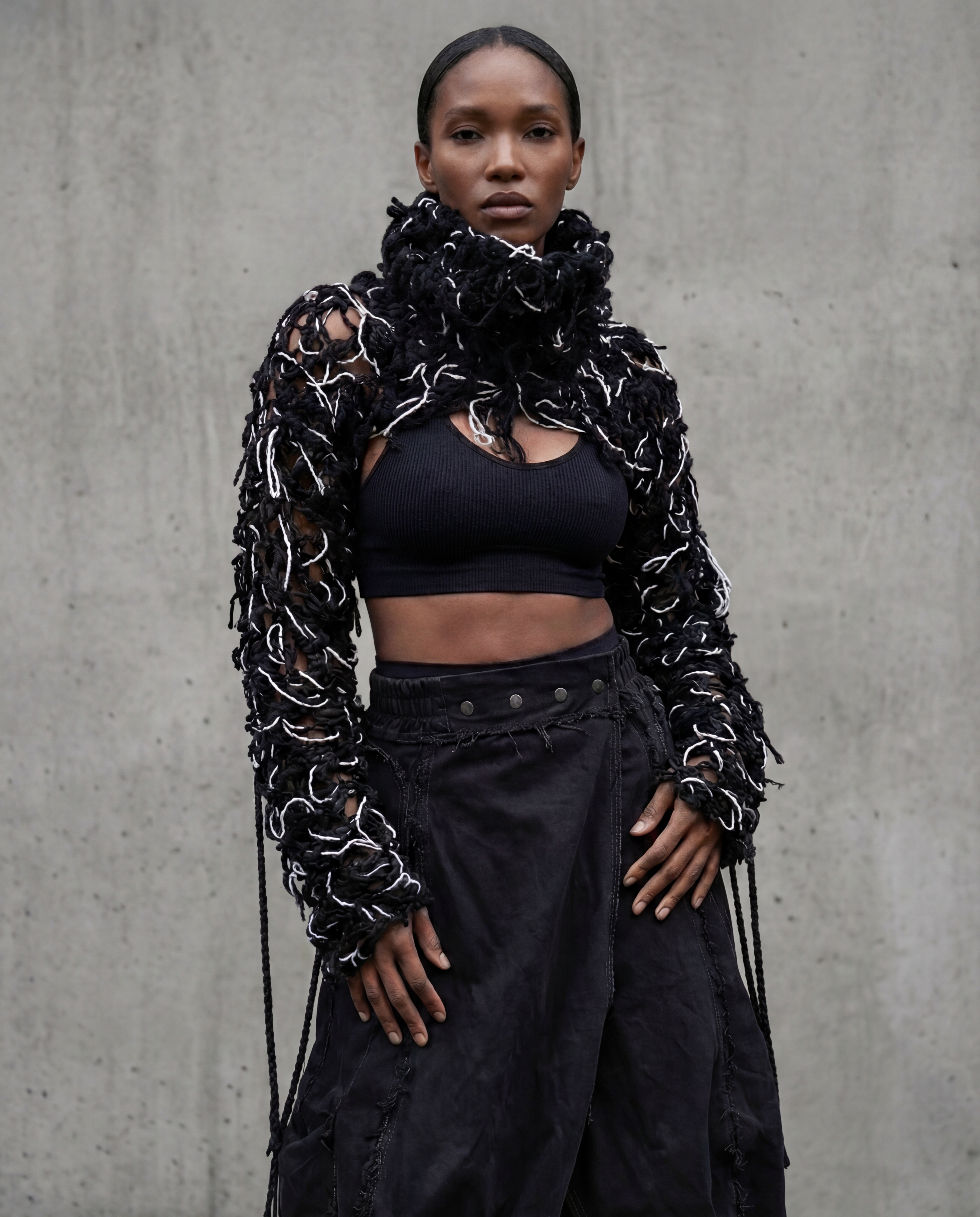
FIBER-BONDFiber Bond holds a central place in Minoar's identity, evolving into a defining artisan language within the brand. Entirely handmade and developed piece by piece through a slow, sensitive, and mindful process, it carries a depth that cannot be replicated through industrial textile methods. Its strength lies not only in its visual individuality, but also in its versatility: the technique can incorporate extremely fine fibers and delicate yarns as well as heavy, voluminous materials, allowing for a wide range of textures, weights, and expressions.
The Fiber Bond is valued for its durability, wearability, and circular potential. It can be combined with other artisan practices, including patchwork and Boro-inspired constructions, to create expressive yet robust garments. Because the technique draws from fabrics and fibers already within the brand's own material arsenal, it allows existing resources to be reused with intention rather than discarded. In this way, Fiber Bond functions not only as an aesthetic and structural signature, but also as an important part of Minoar's approach to sustainability, material longevity, and responsible handmade production.
The Fiber Bond is valued for its durability, wearability, and circular potential. It can be combined with other artisan practices, including patchwork and Boro-inspired constructions, to create expressive yet robust garments. Because the technique draws from fabrics and fibers already within the brand's own material arsenal, it allows existing resources to be reused with intention rather than discarded. In this way, Fiber Bond functions not only as an aesthetic and structural signature, but also as an important part of Minoar's approach to sustainability, material longevity, and responsible handmade production.
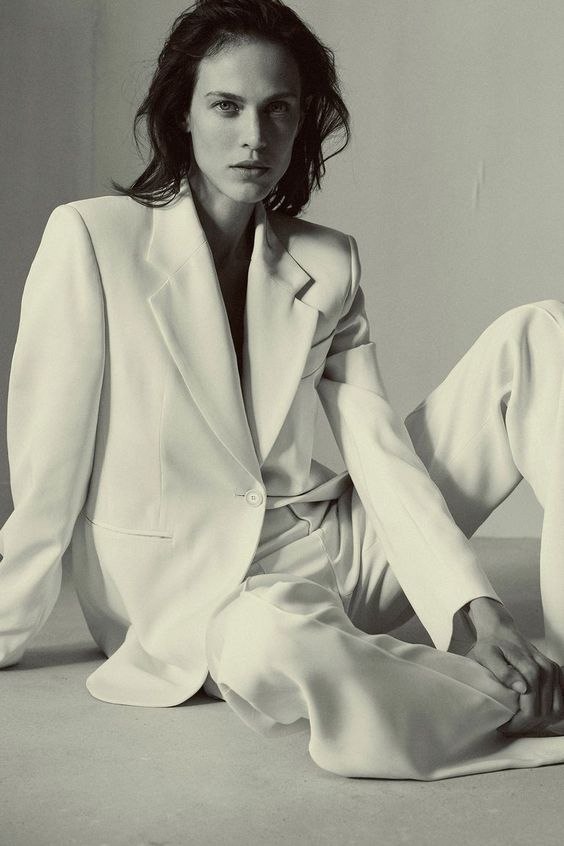
Crushed TechniqueThe Crushed Technique is a handmade textile process that transforms fabric through irregular folding, thermal pressing, and fixation onto a stable base, creating a dense sculptural surface with lasting depth. Often reinforced with full lining and extensive topstitching, it gives each garment both distinctive character and long-term durability. In its asymmetrical form, the technique produces a unique visual rhythm across every piece; in its linear variation, the same process is directed into sharper, more structured folds. Across jackets, pants, vests, and accessories, Crushed functions not only as a surface treatment, but as a construction method that shapes volume, movement, and identity.
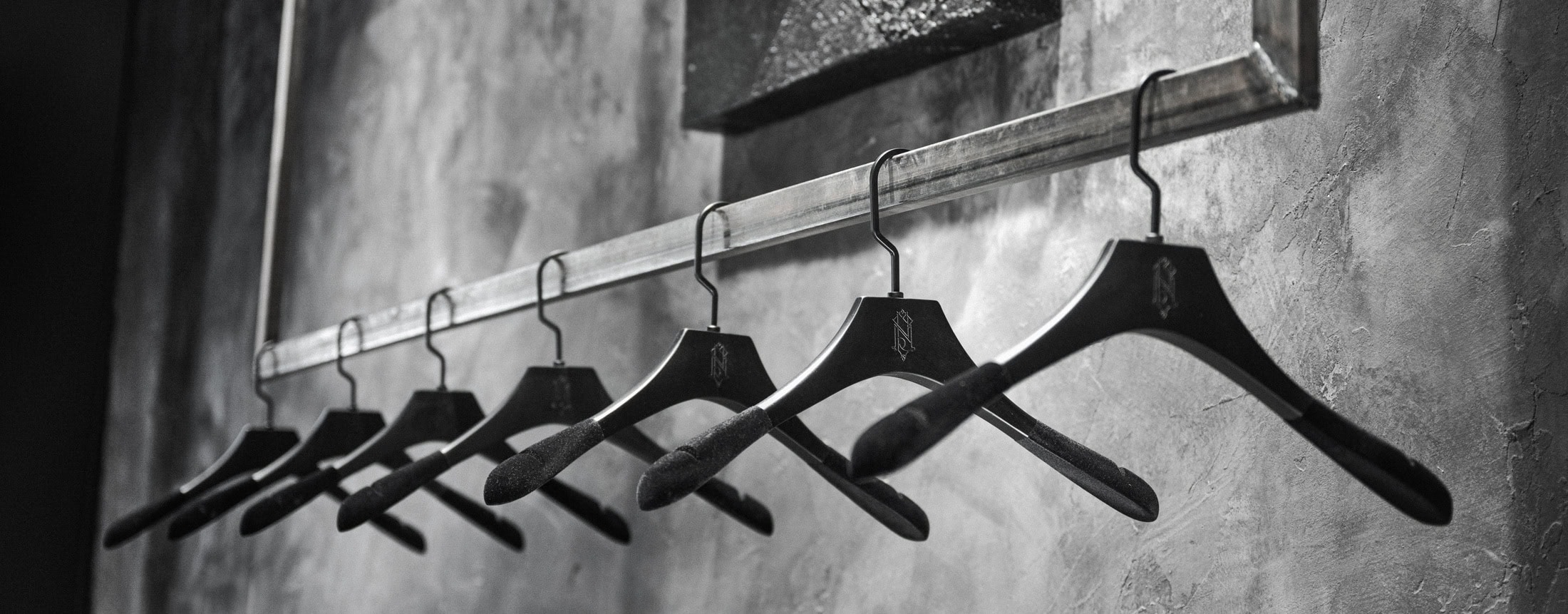
Stainless Steel HardwareFrom the first S/S and A/W 2015 collections, Trans Urbem and Unsullied, stainless steel hardware became a defining functional detail within Minoar's construction language. Handcrafted buttons, pullers, buckles, and rings introduced a durable industrial precision that remains constant across the brand's garments and accessories. At the center of this language is the hexagon buckle, derived directly from Minoar's identity symbol and reduced to its most essential form. Used both as a fastening element and a garment hanger, it is crafted in stainless steel and developed as a lasting structural signature. From 2020 onward, this hexagonal vocabulary expanded further into patterns, accessories, and construction details, from heavy six-millimeter buckles to half-hexagon D-rings designed for weight, durability, and permanence.
Diagonal Welt PocketsThe Diagonal Cut Welt Pocket is one of Minoar's most recognizable construction signatures, expressing the brand's identity through a subtle yet deliberate shift in form. Introduced in 2015 and further articulated in S/S18 Within, it transforms a classic functional detail into a more unconventional, and immediately distinctive. By setting the welt at a diagonal angle, the pocket gains a sense of direction and tension that breaks visual uniformity while remaining fully practical. Repeated across more than 300 garments and accessories, this detail has become a consistent marker of individuality.